Your Professional Hybrid SEDAN Supplier
Starting to enter the automotive industry in 1998, it has been involved in the construction of automobile culture and the construction of multiple industrial parks. It has the experience and foundation of a complete automobile service ecosystem, including agency car brand dealers, car testing stations, vehicle modifications, etc. Now, following the country's "Belt and Road" has obtained many partners in many countries, and has established sales channels in many overseas countries to better serve more customers. In the future, we will serve every one of our customers more attentively, provide the most perfect products to everyone, and provide endless services.
-
![TOYOTA CAMRY]() TOYOTA CAMRYThe Toyota Camry 2024 Hybrid 2.5HG Premium Edition combines advanced hybrid technology, refined design, and premium features, positioning itself as a standout choice in the midsize sedan market. Below is a detailed introduction to its...view more
TOYOTA CAMRYThe Toyota Camry 2024 Hybrid 2.5HG Premium Edition combines advanced hybrid technology, refined design, and premium features, positioning itself as a standout choice in the midsize sedan market. Below is a detailed introduction to its...view more

Why Choose Us
Improve Quality Management
System The company strives to improve customer satisfaction through Continual Improvement of the Quality management system.
Production Market
Our More than 1,000 cars have been sold in the African region this year and service locations have been established in many countries.
Our Factory
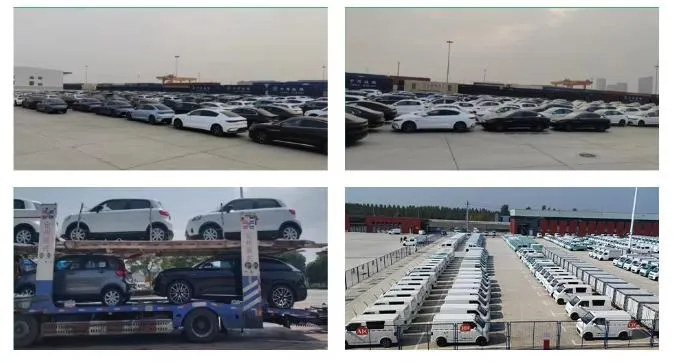
Our the Automobile export industrial park, automobile sales industrial park, automobile inspection station, automobile repair and modification, automobile spare parts storage.
Our service
We will provide the latest styles of products for everyone to choose from, and according to customer requirements and suggestions, we provide perfect solutions to partners. If policies and conditions permit, we have established service platforms in relevant countries and regions and will provide after-sales services to customers.
Advantages of Hybrid SEDAN
Efficiency
Hybrid cars are more fuel-efficient. They use gasoline and electric power or electric power for short distances.
01
Environmental Impact
Hybrids emit less than traditional gasoline vehicles, making them a greener choice, especially in cities where air quality is a concern.
02
Lower Operating Costs
Hybrid owners spend less on gas due to better fuel efficiency, especially in city driving. Governments offer incentives like tax credits or rebates, further reducing overall costs.
03
Regenerative Braking
Regenerative braking technology captures energy during braking and converts it into electricity to recharge the battery, improving energy efficiency and extending the lifespan of brake pads.
04
Technology And Features
Hybrid vehicles are equipped with advanced technology that contributes to their efficiency and performance, such as regenerative braking, energy-efficient tires, and aerodynamic designs.
05
Specification
|
Basic Information |
|
|
Level |
Mid-size car |
|
Energy Type |
Plug-in hybrid |
|
Availability |
2024.05 |
|
Engine |
1.5L 101HP L4 Plug-in Hybrid |
|
Maximum Engine power (kW) |
74(101PS) |
|
Maximum motor power (kW) |
160(218Ps) |
|
Engine Maximum Torque (N·m) |
126 |
|
Maximum torque of motor (N·m) |
260 |
|
Gearbox |
E-CVT continuously variable transmission |
|
Length x Width x Height (mm) |
4830x1900x1495 |
|
Body structure |
4-door 5-seater sedan |
|
Maximum speed (km/h) |
180 |
|
Official 0-100km/h acceleration time (s) |
7.5 |
|
WLTC comprehensive fuel consumption (L/100km) |
1.36 |
|
Power consumption per 100 km (kWh/100km) |
13.6kWh |
|
Vehicle warranty period |
6 Years or 150,000 km |
|
Electric Motor |
|
|
Motor Description |
Plug-in hybrid 218 horsepower |
|
Motor Type |
Permanent magnet/synchronous |
|
Total motor power (kW) |
160 |
|
Total motor horsepower (Ps) |
218 |
|
Total torque of the motor (N·m) |
260 |
|
Maximum power of front motor (kW) |
160 |
|
Maximum torque of front motor (N·m) |
260 |
|
Number of drive motors |
Single motor |
|
Motor layout |
Pre |
|
Chassis/Steering |
|
|
Drive mode |
Front front drive |
|
Front suspension type |
McPherson independent suspension |
|
Rear suspension type |
Multi-link independent suspension |
|
Steering type |
Electric power assist |
|
Vehicle structure |
Load-bearing |
|
Wheels/Brakes |
|
|
Front brake type |
Ventilated disc |
|
Rear brake type |
Solid disc |
|
Parking brake type |
Electronic parking brake |
|
Front tire size |
225/50 R18 |
|
Rear tire size |
225/50 R18 |
|
Active Safety |
|
|
ABS anti-lock braking system |
Standard |
|
Braking force distribution (EBD/CBC, etc.) |
Standard |
|
Brake assist (EBA/BA, etc.) |
Standard |
|
Traction control (TCS/ASR, etc.) |
Standard |
|
Vehicle stability system (ESP/DSC, etc.) |
Standard |
|
Active safety warning system |
Lane departure warning |
|
Forward Collision Warning |
|
|
Rear Collision Warning |
|
|
Reversing side warning |
|
|
DOW door opening warning |
|
|
Active braking |
Standard |
|
Lane assist |
Standard |
|
Lane Keeping Assist System |
Standard |
|
Lane centering |
Standard |
|
Road traffic sign recognition |
Standard |
|
Lighting Configuration |
|
|
Low beam |
LED |
|
High beam |
LED |
|
Daytime running lights |
Standard |
|
Adaptive high and low beam |
Standard |
|
Automatic headlights |
Standard |
|
Headlight height adjustment |
Standard |
|
Interior ambient lighting |
Multicolor |
|
Active ambient lighting |
Standard |
|
Headlight Delay Off |
Standard |
Hybrid SEDAN Maintenance

Battery Health: The hybrid car's battery pack is vital for fuel efficiency and longevity. Regularly check the battery's charge to ensure it's functioning optimally, and schedule a battery health check with a certified technician to identify issues early.
Fluid Checks And Changes: Hybrid cars need fluids to lubricate, cool, and function smoothly. Regularly check and replace engine oil, coolant, brake fluid, and transmission fluid based on the manufacturer's recommendations to reduce friction, prevent overheating, and maintain efficiency.
Tires: Proper tire maintenance is crucial for safety and fuel efficiency in hybrid vehicles. Keep tires inflated to the recommended pressure, rotate regularly for even wear, and invest in low-rolling-resistance tires for better fuel economy without compromising performance. Don’t forget those winter tires!
Brakes: Hybrid cars have regenerative braking that captures energy while slowing down. Inspect brakes regularly and replace worn brake pads for optimal performance and safety.
Engine: Hybrid cars use electric motors for propulsion but still have internal combustion engines that need maintenance. Follow the recommended schedule for tune-ups, spark plug replacements, air filter changes, and fuel system cleanings to maximize fuel efficiency and smooth operation, especially during highway driving.
Technology And Software: Hybrid cars use advanced onboard computers to manage power distribution, enhance performance, and optimize fuel consumption. Stay updated with software upgrades offered by the manufacturer to address potential bugs, improve system reliability, and unlock new features.
Drive Train: Have a certified technician inspect your hybrid car's drivetrain components, including the electric motor, transmission, and power electronics, for wear or malfunction. Early detection of issues can prevent costly repairs and ensure efficient and reliable performance.

Key Components of Hybrid Cars
Function: The ICE is a traditional engine powered by gasoline or diesel. It provides power by burning fuel and converting it into mechanical energy.
Role in Hybrid Systems: In a hybrid car, the ICE works in conjunction with the electric motor to enhance overall efficiency.
Function: The electric motor converts electrical energy from the battery pack into mechanical energy to drive the wheels.
Role in Hybrid Systems: The electric motor can operate independently or alongside the ICE. It provides additional power during acceleration, assists in low-speed driving, and can power the vehicle in electric-only mode for short distances.
Function: The battery pack stores electrical energy to power the electric motor.
Types: Common battery types in hybrid cars include Nickel-Metal Hydride (NiMH) and Lithium-Ion (Li-ion).
Role in Hybrid Systems: The battery pack supplies energy to the electric motor and can be recharged through regenerative braking or by the ICE.
Components: Inverters and converters.
Function: Power electronics manage the flow of electrical energy between the battery pack, electric motor, and ICE.
Role in Hybrid Systems: These components ensure efficient energy use and smooth transitions between electric and gasoline power.
Types: Hybrid vehicles use various transmission systems, including traditional automatic, continuously variable transmission (CVT), and dedicated hybrid transmissions.
Function: The transmission system transfers power from the engine and electric motor to the wheels.
Role in Hybrid Systems: It optimizes power delivery to ensure smooth and efficient operation.
Function: Captures energy that would otherwise be lost during braking and converts it into electrical energy.
Role in Hybrid Systems: This energy is stored in the battery pack, increasing overall efficiency and extending the vehicle’s electric range.
Function: Manages the interaction between the ICE, electric motor, battery pack, and power electronics.
Role in Hybrid Systems: The control module ensures that the vehicle operates efficiently by selecting the optimal power source and managing energy flow.
Product Packaging
FAQ
Wenzhou Haorong Automobile Sales And Service Co., Ltd. is well-known as one of the leading hybrid sedan manufacturers and suppliers in China. Please feel free to wholesale discount hybrid sedan in stock here from our factory. For quotation, contact us now.
hybrid sedan, TOYOTA CAMRY, best gas mileage suv 2022 non hybrid