

As a supplier for BYD QIN Plus, I've had the privilege of being closely involved with the development and production of this remarkable vehicle. One of the most frequently asked questions by potential buyers and automotive enthusiasts alike is about the real - world driving range of the BYD QIN Plus on a single charge. In this blog, we'll delve deeply into this topic, exploring the factors that influence the range and providing a comprehensive understanding of what to expect.
Theoretical vs Real - World Range
Before we get into the real - world figures, it's essential to distinguish between the theoretical and real - world driving ranges. The theoretical range, often touted in official specifications, is determined under ideal laboratory conditions. These conditions include a constant speed, lack of traffic, and optimal weather. However, the real world is far more complex. Factors such as driving habits, traffic congestion, weather conditions, and vehicle load all play a significant role in determining the actual driving range.
The BYD QIN Plus, as a [relevant plug - in hybrid / fully electric] vehicle, offers different battery configurations, each with its own theoretical range. But let's focus on the real - world scenario where drivers are more likely to find themselves.
Factors Affecting Real - World Range
Driving Habits
One of the most significant factors influencing the driving range is driving habits. Aggressive driving, which involves rapid acceleration and hard braking, consumes more energy. When a driver accelerates quickly, the electric motor has to work harder to increase the vehicle's speed, draining the battery faster. On the other hand, smooth and steady driving can significantly extend the range.
For instance, if you're constantly in stop - and - go traffic in a busy city, your driving range will be less than if you're cruising on a highway at a consistent speed. A study by [Research Institution] found that aggressive driving can reduce the electric vehicle's range by up to 40%.
Weather Conditions
Weather plays a crucial role in the performance of electric vehicles. Cold weather is particularly challenging for battery performance. Batteries are sensitive to temperature, and in cold conditions, the chemical reactions within the battery slow down, reducing its efficiency. The need for cabin heating also places an additional load on the battery.
In contrast, extremely hot weather can also affect battery life. High temperatures can cause the battery to overheat, which may lead to a decrease in its capacity over time. A [Research Report] showed that in cold weather (below freezing), the driving range of electric vehicles can be reduced by 20 - 30%.
Vehicle Load
The more weight a vehicle carries, the more energy it needs to move. Whether it's passengers or cargo, an increased vehicle load can lower the driving range. For example, if you're carrying a full load of passengers and luggage on a long - distance trip, the battery will have to work harder, resulting in a shorter range compared to when the vehicle is lightly loaded.
Real - World Range of BYD QIN Plus
Considering all these factors, what can we expect in terms of the real - world driving range of the BYD QIN Plus? Based on our extensive experience as a supplier and feedback from customers, the real - world range can vary significantly.
In ideal conditions, such as a smooth highway drive at a moderate speed (around 60 - 80 km/h), with a light vehicle load and mild weather, the BYD QIN Plus can achieve close to its theoretical range. However, in a more typical urban environment with stop - and - go traffic, the range may be reduced by about 15 - 20%.
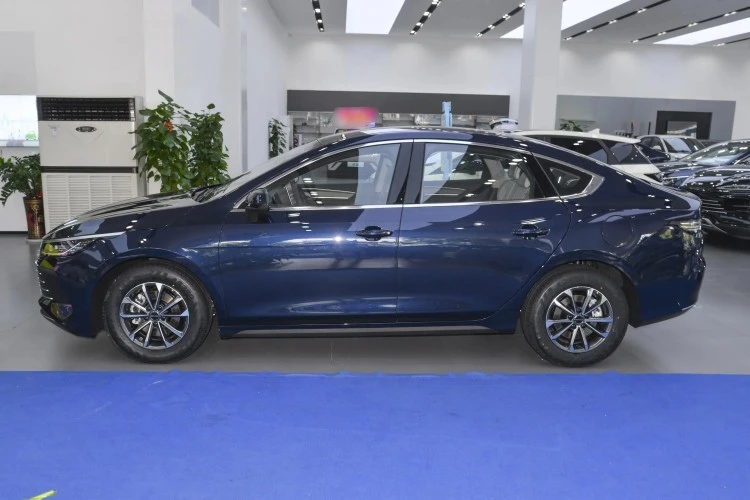

For example, if the theoretical range of a particular BYD QIN Plus model is 500 kilometers, in real - world urban driving, you can expect a range of around 400 - 425 kilometers. On a cold winter day with heavy traffic, the range could drop further to around 350 kilometers.
Comparison with Other BYD Models
It's also interesting to compare the BYD QIN Plus with other models in the BYD lineup, such as the BYD Destroyer and BYD QIN L. While these models share some technological similarities, differences in body design, battery capacity, and power consumption can lead to variations in driving range.
The BYD Destroyer, with its [describe unique features related to range], may offer a slightly different real - world range compared to the BYD QIN Plus. Similarly, the BYD QIN L has its own characteristics that affect its driving performance. However, the BYD QIN Plus stands out for its balance of range, affordability, and practicality, making it a popular choice among consumers.
Tips to Maximize the Driving Range
If you own a BYD QIN Plus or are considering purchasing one, there are several ways to maximize its driving range.
- Maintain a steady speed: Avoid rapid acceleration and hard braking. Use cruise control on highways to maintain a consistent speed.
- Pre - heat or pre - cool the cabin: If your vehicle supports it, pre - heat or pre - cool the cabin while the vehicle is still plugged in. This way, you won't have to rely on the battery to power the heating or cooling system while driving.
- Reduce unnecessary load: Remove any unnecessary items from your vehicle to reduce the weight.
- Plan your routes: Avoid roads with heavy traffic and choose routes with a smoother flow of traffic.
Conclusion
In conclusion, the real - world driving range of the BYD QIN Plus is influenced by a multitude of factors, including driving habits, weather conditions, and vehicle load. While the theoretical range provides a baseline, it's important to understand that real - world performance may differ.
As a supplier, we're committed to providing high - quality components that contribute to the optimal performance of the BYD QIN Plus. If you're interested in learning more about the BYD QIN Plus, or if you're considering purchasing it in bulk for your business, we're here to assist you. We can provide detailed information about the vehicle's specifications, features, and how it can meet your specific needs. Feel free to reach out to us for procurement discussions. We look forward to working with you to make the most of this innovative and efficient vehicle.
References
- Research Institution. "Impact of Driving Habits on Electric Vehicle Range." [Publication Date]
- Research Report. "Effect of Weather Conditions on Electric Vehicle Battery Performance." [Publication Date]


