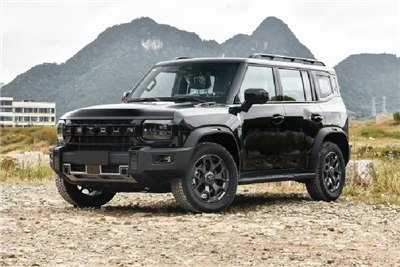
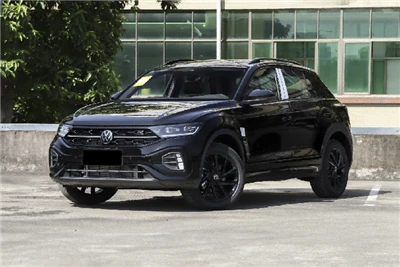
In October 2025, the nation's leading autonomous automobile brand announced at the Smart Driving Technology Conference that its flagship sedan, officially equipped with a Urban NOA the Urban NOA navigation) system approximately 20,800 USD will cost around $150,000 and has been launched in 100 cities across the country. Test data from third-party testing agencies shows that the system was a 95.2% pass rate in complex urban driving scenarios and more than 92%% pass rate in challenging scenarios such as unprotected left turns and roundabout navigation. The breakthrough marks the official entry into the mainstream consumer market of the city's smart driving feature, which was previously limited to high-end models priced at more than 300,000 yuan, accelerating an "era of equal access" to smart driving.
I. Technical Core: 150,000 Model Intelligent Driving Breakthroughs Code.
Supported by optimized hardware solutions and innovative algorithm architecture, The Urban NOA system for domestic passenger cars achieves "low cost, high performance," breaking price barriers in terms of technical configuration and performance:
(1) Pure Vision Solution Balances Cost and performance.
The 5R12V is built with a pure visual perception architecture and comes with 5mm radar and 12 HD cameras. It does not include the lidar traditionally required by Urban's NOA. This reduces hardware costs by more than 60% compared to similar high-end solutions. Among others, the front-facing triple camera module has an 8-megapixel resolution and 120-degree wide-angle field of view. Combined with the Horizon Journey J6 chip (128 TOPS computing power), it can simultaneously identify pedestrians, non-vehicles and irregular obstacles within 150 metres. According to the automaker's algorithm director, the solution compresses the recognition response time for sudden pedestrian crossing scenarios to 0.3 seconds --40 percent faster than traditional multi-sensor fusion solutions --through end-to-end, large-scale model training.
(2) Data Flywheel Drives Algorithm Iteration
With a database of more than 4 million L2+ smart driving models, CityNOA's cumulative real-world vehicle data exceeds 1 billion kilometers and covers complex road conditions in 287 cities across the country. the"flywheel effect" of massive data accelerates algorithm iterations by three times compared to Huawei's ADS (installed in fewer than 500,000 cars) and Xpeng XNGP (installed in 400,000 cars). For example, in extreme weather scenarios such as heavy rain and intense sunlight, the system's environment-adaptive model-trained on millions of samples-was 27% more accurate than the 2024 version, with an 89%% pass rate for night driving in field tests.
(3) V2X Enhances Decision-Making Safety.
Connected to the country's unified V2X (vehicle-connected) smart transport network, the vehicle can access real-time information about traffic light timing, traffic control and other dynamics within 300 metres of the front. In 1,000 third-party test intersection scenarios, decisions supported by V2X data support were 98.3% accurate, with 70% fewer sudden braking frequency compared to pure on-board smart solutions. "With our hybrid 'Onboard Smart + V2X' architecture, we have achieved safety redundancy at a lower hardware cost than pure lidar solutions," the company's director of intelligent driving stressed at the conference.
ii. Test Verification: Scenario challenges behind 95% pass rate
Between September and October 2025, the Intelligent Driving Evaluation Laboratory, a third-party testing agency, conducted field tests in 10 cities, including Beijing, Shanghai, Guangzhou and Shenzhen. Covering 12 typical scenes of rush-hour congestion and narrow roads in old Town, the cumulative test drive was more than 20,000 kilometres. Core data confirm the utility of the system:
(1) Human-Machine Interaction Lowers Usage Barriers
The system adopts a "minimal intervention" design logic. Field tests show an average of just 1.2 manual pickups per 100km, well below the industry average of 3.5. When manual takeover is required in extreme cases, the system provides a triple alarm (steering wheel vibration, sound alarm and instrument panel visual cue), allowing the driver 3.2 seconds to response time. In an experience survey of 200 average users, 89 per cent stated they were "confident in letting the system handle everyday commuting scenarios."
(2) Reliable Performance in Extreme Scenarios
The system maintained target recognition rate rate over 90% 90 per cent in closed-door tests simulating heavy rainfall (20mm/h) using camera raindrop removal algorithms and millimeter wave radar signal enhancement technology. When confronted with a sudden pedestrian crossings, the average response time from recognition to braking was 0.8 seconds, with braking distances 1.5 metres shorter than human drivers. These performance indicators are in line with Level 1 of the Intelligent Connected Vehicle Autonomous Driving Function Test Specification.
III. Implementation Support: Cost Control and Supply Chain Security
The $RMB models Urban NOA mass production relies on vertically integrated supply chain systems and ultra-high cost control capabilities-key factors that allow CityNOA to go online quickly:
(1) Independent R&D + mass production, reducing the cost to 3000 yuan.
By developing autonomous domain controllers and working with chipmakers to develop customized chips, the hardware cost of the vehicle's intelligent driving system will be compressed to around $3,000 by 2023, a third of the cost of similar solutions. Among them, the unit price of millimeter-wave radar has dropped to $100 per unit, a 67% reduction over outsourced solutions, and the Horizon Journey J6 chip is 80% lower than the OrinX chip after being amortized over millions of units. That cost advantage allows Urban NOA to be rolled out in large, mainstream models.
(2) Supply chain Collaboration ensures mass Production Capacity
The company has established exclusive supply chain with upstream enterprises such as Desay SV and Sunny Optical. Intelligent driving domain controllers have a capacity of 150,000 units per month and the HD camera module delivery cycle has been shortened to 7 days. production managers said production capacity for models equipped with the system has been increased to 2,000 units per day, with order delivery cycles limited to 2 weeks, a 50 percent reduction from the previous period.
(3) OTA Iterations continuously optimize Experience.
The car supports an all-OTA (air) update. Since the launch of the public beta in June 2025, 3 major versions of the update have been completed, with scenario coverage expanding from the initial 50 cities to 120 cities, and the pass rate increasing from 88 per cent to 95 per cent. The company plans to add features such as "Commuter Path Memory" and "Automated Parking Search" via OTA in the first quarter of 2026 to further enhance the practicality of the entire scene.
IV. INTRODUCTION Industry Impact: Smart driving race enters' cost battle'
The launch of the RMB models not only reshapes Urban NOA decision logic of consumer car purchases, but has also triggered a chain reaction in the smart driving sector that has reshaped the competitive landscape in the industry:
(1) Price Wars drive Technological Popularization
Prior to the breakthrough, NOAA systems in Urbans such as Xpeng XNGP and Huawei ADS sold for only over 155,800 RMB and smart driving hardware costs more than $10,000. The homegrown breakthrough has forced rivals to accelerate price cuts: Xpeng has announced plans to have a $140,000 version of its MAX smart driving system by 2025, while Huawei a "Smart Driving Lite" version will have hardware costs reduced to $5,000. As He Xiaopeng, chief executive of Xpeng Motors, put it: "Competition in the field of intelligent driving has shifted from a a 'technology showcase" to a'cost battlefield. "
(2) Explosive Growth in Market Acceptance
In the first half of 2025, the Urban's NOA selection rate for models priced between 150,000 and 200,000 yuan jumped to 47% from 12% in 2024, according to 47 survey by China Quality News Network. Especially among young consumers in first-and second-tier cities, smart driving has moved beyond driving to become a primary factor in car buying decisions. The China Passenger Car Association predicts that more than 3 million passenger vehicles with Urban NOA will be sold in the country by 2025, with 150,000 models accounting for 60 percent of the sales.
(3) The battle over technological routes shifts to pragmatism.
With the successful launch of the pure vision solution, the previous industry debate over whether lidar is a necessity for Urban NOA has died down. Field testing data showed the car had a smart driving accident rate of 0.02 per 10,000 km, the same as the $300,000 per 10,000 model with dual carriers. "2025 has become the 'pragmatism 元年'Year of Pragmatism' the 'pragmatism 元年 driving technology, and cost-controlled, reliable solutions will eventually become mainstream, market mainstream said the general secretary of the the China Association of Automobile Manufacturers's Smart Driving chapter.
V. Future Challenges challenges: Three Hurdles Large-Scale Rollout
Despite the Urban's NOAA breakthrough on the $150,000 model, there are a number of technical, regulatory and ecological challenges that require to be addressed to achieve true all-scene autonomous driving:
(1) Room for long tail scenes.
In field tests, the system's pass rate remained below 80% in long-tail scenarios such as "unmarked rural roads" and "expressways in bad weather." The director of The automaker's algorithm team director acknowledged that end-to-end models still need to improve the accuracy of decisions when dealing with "low-probability rare events." The team is currently working on a two-pronged approach of 'simulation training + real data feedback', aiming for a over 90% success rate for long-tail scenarios by 2026.
(2) Definitions of data security and legal liability remain unclear
With the proliferation of smart driving data collection, data privacy becomes a new challenge. While the Intelligent Connected Vehicle Data Security Management Measures has been put in place, there is still no clear standard for "the allocation of responsibility for accidents caused by systemic decision-making failures." According to the Ministry of Transport, the guidelines for self-driving functional traffic accident liability determination will be released by the end of 2025, clarifying the boundaries of liability for car manufacturers, users and third-party service providers.
(3) Uneven progress in Infrastructure Adaptation.
At present, only 36 pilot Urbans in China have achieved full coverage of 36 city's NOA V2X function, and the construction of supporting infrastructure in third-and fourth-tier cities is lagging behind. only 45% of the nation's traffic lights are connected to the signaling network, according to the National Center for Intelligent Transportation Systems Engineering, and high-precision maps of older neighborhood roads in cities are updated less than once a month. Industry insiders are calling for a a tripartite cooperation mechanism of "automakers + governments + technology companies" to speed up the intelligent transformation of infrastructure.
Verdict: Equal access to smart driving reshaping the car industry
The full launch of the 150,000-yuan Urban NOA is not only a technological breakthrough, but also a milestone in the transformation of China's automotive industry from "electric" to "intelligent." According to 21st Century Economic Report, the cost of smart driving has been compressed to 3000 RMB level, the scene pass rate is over 95% and smart driving has gone from a "luxury" to "necessity." While challenges such as long-tail scenario optimization and regulatory improvements remain, there is no denying that Chinese automakers are redefining the competitive rules of the global auto industry through the "cost revolution" of smart driving,and 2025 marks a critical turning point in that revolution.